From Struggle to Strength:
The Decision That Changed How I Coach

Hi, I’m Fernando, founder of Fusion Fitness Studio.
Most fitness professionals tell a journey story — where they started, how long they’ve trained, and what they achieved along the way.
Mine is different.
The most important moment in my career wasn’t a breakthrough or a milestone.
It was a realization:
When capable, motivated people repeatedly break down, the problem isn’t effort — it’s the model.
That realization didn’t come from theory or trends.
It came from years of observing what didn’t hold up — first in my own body, and later across hundreds of clients who were doing “everything right” and still struggling.

The Pattern I Couldn’t Ignore
At 17, I injured my lower back lifting a couch.
Like most people, I followed the standard advice: strengthen the area, stretch, stay active, push through, trust the program.
The pain didn’t respond to effort.
It responded to structure — or the lack of it.
In my 20s, after years of training hard and staying committed, I ended up in the ER with severe muscle spasms. That moment forced a question I couldn’t ignore any longer:
Why do disciplined, compliant people keep breaking down even when they’re doing everything they’re told?
That was the moment I stopped assuming the answer was motivation, toughness, or discipline — and started questioning the assumptions underneath the training itself.

The Conversion:
From Program-First to Physiology-First
Up until that point, like many coaches, I had accepted a familiar internal question:
How do I continue to push through this?
That mindset is a trap — one I fell into myself at times, and one I see countless people stuck in. Not because they’re reckless, but because they believe progress requires constant pushing.
The shift happened when the question changed.
Instead of asking how to keep pushing, I began asking:
What does this body have the capacity to tolerate — right now?
Once I started viewing the body as a living, adaptive system instead of something to override, clear patterns emerged:
Individual readiness governs progression
Integration matters more than isolation
Recovery isn’t optional — it’s structural
Results that borrow from the future always come with a cost
The methods that followed weren’t created to be new or different.
They emerged because existing models couldn’t explain what I was consistently observing in real people, over real timelines.
In 2009, after 15 years of practice-driven refinement, those principles became formalized as the Fusion Fitness & Performance™ training system, with the Core-to-Strength™ Method at its foundation.

When the Model Was Tested Again
At 42, a slip-and-fall reactivated old back issues — a reminder that aging bodies operate under different constraints. The system evolved again.
At 51, I was diagnosed with a heart arrhythmia that required surgery. That experience imposed a non-negotiable truth:
Capacity governs everything.
That moment didn’t inspire me — it clarified me.
Recovery, regulation, and respect for biological limits moved from “important” to foundational.
The hierarchy was confirmed, not revised.

Where That Leaves Me Now
Today, I coach from observation — not ideology.
I work best with adults who value:
durability over hype
understanding over quick fixes
long-term capability over short-term performance
People who want to train intelligently, respect their body’s signals, and build strength that actually holds up across decades of life.
If you’ve been doing “everything right” and still feel stuck, worn down, or unsure how much your body can handle, the problem is likely not you.
And that’s exactly where the work begins.
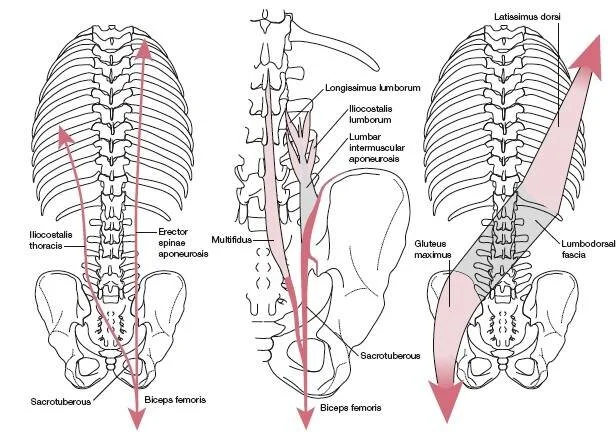
The body was never meant to be trained as disconnected parts. Understanding force transfer and whole-body integration became central to my work.
Why I Had to Define the Core
For more than 20 years, one question continued to bother me:
How can an industry talk so much about “the core” without ever clearly defining it?
Everywhere I looked, the definitions were fragmented:
Some described the core as the abdominal & low-back muscles.
Others expanded it to the trunk.
Some included the hips, diaphragm, or pelvic floor.